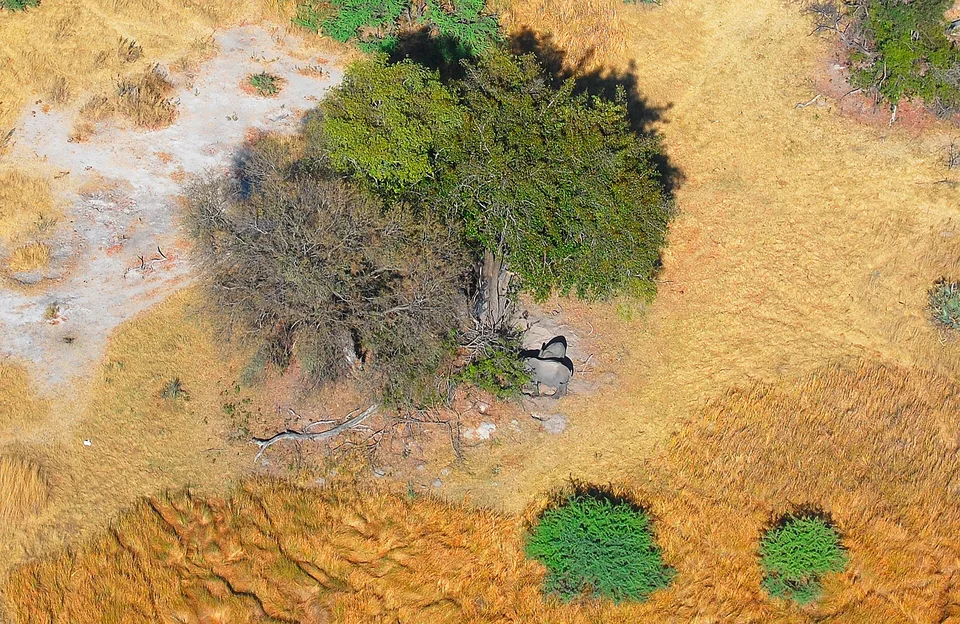
Three hundred kilometres north-east of the Delta, on the far side of the Kalahari’s northern edge, the water does the opposite of what it does here. It never leaves. Chobe is not a second Okavango; it is the park that grew on a permanent river while the Delta was built by a flood that arrives months after the rain. That single difference decides everything below — what you see, what it costs, and who should skip it.
Chobe is not a second Delta
Most comparisons of the two fail because they are written as though one is a cheaper version of the other. They are not. What follows is the whole difference in eight lines, which is more than most guides will give you.
| Chobe | Okavango Delta | |
|---|---|---|
| What it is | A national park either side of a river | A flood fan — seasonal marsh, no permanent water anywhere |
| Water in May | Permanent. The river never leaves | Absent. The flood arrives months after the rain that made it |
| How you get in | Kazungula bridge from Victoria Falls, or a road from Maun. Off-road, mostly | Light aircraft onto a concession. No road worth naming |
| On the water | A flat-bottomed motorised boat, engine on, wildlife around it | Mokoro — poled, silent, you cannot hear anything approaching |
| The reason to come | Elephants, in numbers no other park in the country puts in front of you | Habitat variety: wetland, mopane, acacia forest, land and water in one day |
| Birds | 450 to 500 species, and the river pulls them in all year | As many again, weighted towards waterbirds and the species the flood moves |
| Cost per day | A gate fee of about BWP 270 per person, plus a vehicle fee | A concession rate that includes everything, inside a rate nobody publishes |
| Who it suits | Self-drivers, families, anyone with one spare day near the falls | Anyone whose budget is in lodges rather than flights |
The row that decides most bookings is water in May. When the Delta has drawn its flood off and the camps are arguing about depth, the Chobe river is exactly where it was in February. That is why the season advice for the two runs in opposite directions, and why an itinerary built for one can be badly out of step with the other.
The elephant number, and why every guide quotes a different one
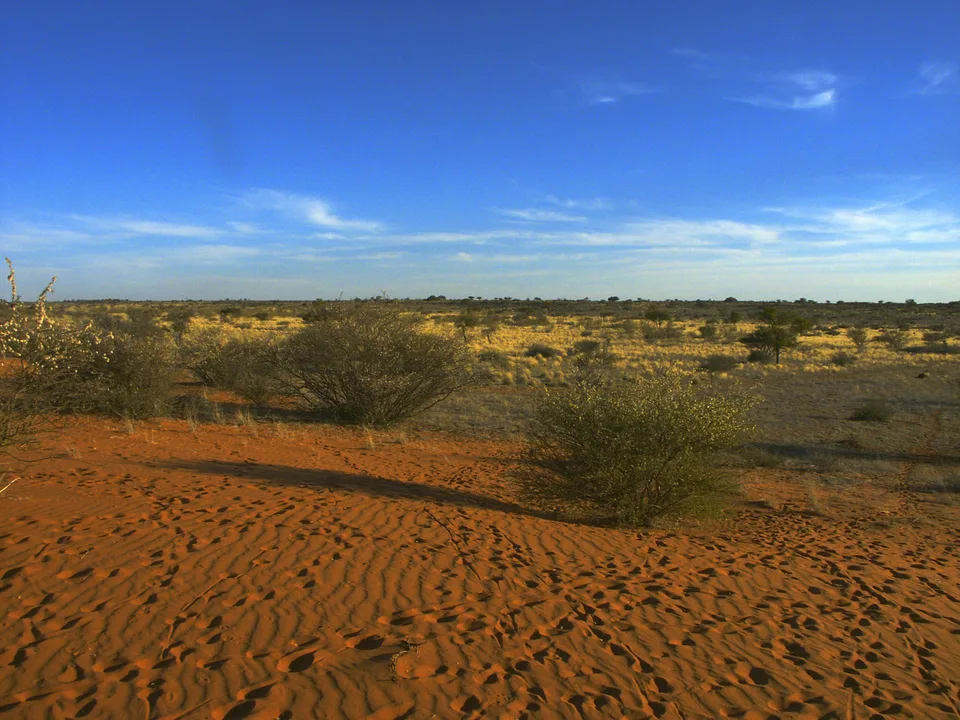
Search for Chobe’s elephant population and you will get 50,000, you will get 120,000, and you will get a claim of “over 130,000” before you have read three results. The spread is large enough that whichever figure you landed on was chosen by whoever wrote the page, not measured by anyone.
What survives the rounding is narrower and more useful. The Chobe-Linyanti system holds the largest elephant population in Africa and the animals are Kalahari elephants — the largest-bodied elephants known, adapted to walking for water across country that has none. A single herd occupies anything from a family group to a clan of several hundred, and the wild dogs, lions and crocodiles in the same system are there for the same reason the elephants are: the water is permanent, so everything is concentrated around it.
The honest version of the claim is about a moment rather than a census. On a good late-afternoon river cruise in the dry season, several hundred elephants can be within a kilometre of the boat, arriving in loose ranks of twenty, thirty and fifty to drink. That is the thing worth coming for, and it does not need a decimal place.
One thing is not a myth. Woodland cover in the Chobe district fell from something close to 60 per cent down to something close to 30 per cent between 1962 and 1998, and elephants browsing and trampling in that density are the obvious mechanism. Any guide quoting an enormous number is not wrong to call this a wonder; it is wrong to suggest that nothing about it is contested.
Four places inside one park
Chobe is Botswana’s first national park, gazetted in 1967 after a game reserve was set aside in 1960, and at roughly 11,700 km² it is the third largest in the country. It is also not one place. The park runs on the Chobe river in the north and thins out to the south-west, and the four sectors behave like different destinations.
Serondala, the riverfront
The part you will actually see. Floodplain, mahogany and teak woodland, and the only sector where the elephants reliably appear at water in front of a boat.
Savuti
Open grassland and the ghost trees of the Savuti Channel, which cycled for years without flowing at all before it started again. The predator country — lion, hyena, and the wild dog the rest of the park does not have in numbers.
Linyanti
North-west corner, mopane dense enough to hide what you are looking for. Wild dog, sable, and red lechwe in the swamps.
Nogatsaa
Between the two. The least driven ground in the park, which is exactly why a four-wheel drive and a spare of anything you can puncture matters.
The trap in Savuti is a naming one. Savute Safari Lodge and Savute Elephant Camp are inside the park. Savuti Camp is not — it sits out in the private Linyanti concession. They are different products at different prices under rules written by different authorities, and the two names are three letters apart. Check the concession before you pay a deposit.
Getting in without losing the day to a border
A Chobe day trip from Victoria Falls is a border crossing with a safari attached, and the border is where the day is won or lost. Victoria Falls town is roughly 70 km from Kasane, an hour on the far side of the bridge at Kazungula — four countries meet there, and the old ferry is gone, replaced by the bridge. Formalities on a normal day run from twenty minutes to an hour, and then there is the foot-and-mouth check: everyone steps onto a treated mat and the vehicle’s tyres are sprayed. It is routine, and it is also the reason to carry the passport rather than a copy.
| Time | What |
|---|---|
| 06:30 | Collected from a Victoria Falls hotel |
| 07:30 | Kazungula bridge — barefoot on a treated mat, tyres sprayed |
| 09:30 | Kasane and the Sedudu gate, fees paid in cash |
| 10:15 | Riverfront game drive, the road corridor animals use anyway |
| 13:00 | Lunch in Kasane, then the boat at the hottest part of the day |
| 16:30 | Chobe river cruise — the hour the herds come down to drink |
| 19:00 | Back across the bridge and checked in at the falls |
Twelve to thirteen hours, door to door. Base yourself in Kasane instead and the same activities happen at a quarter of the driving. For anyone entering from the Zambian side in Livingstone, the same trip works with one more crossing added to it.
What it costs, in detail
Chobe publishes its prices, which almost no part of the Delta sector does. Two rules apply. The person fee and the vehicle fee are separate, and the vehicle fee is charged for arrival and departure days — a three-night stay pays four. Fees are collected in cash at the gate or at the wildlife offices, and the card machines at the border are not to be trusted.
| Item | Chobe | Notes |
|---|---|---|
| Park entry, adult | BWP 270 per day | Botswana citizens BWP 30; SADC residents BWP 205. |
| Park entry, ages 8–17 | BWP 135 per day | Under 8s free. The card must be kept while you are inside. |
| Vehicle, under 3,500 kg | BWP 115 per day | Separate from the person fee. A three-night trip pays four days. |
| Campsites | About USD 50–70 per person per night | Ihaha, Savuti and Linyanti. Booked separately, no wild camping. |
| Gate hours | 06:00–18:30 (April–September) | 05:30–19:00 outside it. Sedudu Gate on the Kasane side. |
Only four-wheel-drive vehicles are admitted to the park, so a self-drive budget is a vehicle budget as well. Fuel and food between Maun and Kasane are the other line item nobody budgets for, because there is nothing to buy on that road.
Where the two actually connect
They are roughly 300 km apart, which is one short flight or one long drive, and the thing people miss is that neither is a consolation prize for the other. The Okavango gives you habitat variety — wetland, mopane, acacia forest, and animals that are only there because of the flood, like the red lechwe and the sitatunga. Chobe gives you elephants at water and a published price per day.
The shape that works: fly into a Delta camp for three or four nights, then go northeast and do Chobe overland from Maun or from Kasane. You end with both water systems and a route that reads north instead of doubling back. The shape that does not: booking a Delta lodge and a Chobe day trip on the same week without checking what the flood is doing in the first of them.
Who should skip Chobe
It is a good park, but it is the wrong choice in four specific cases. If you have two nights in Botswana, spend them in the Delta — you will not see enough Chobe for the driving to earn itself. If predator action is the reason you came, go to Savuti specifically and stay at least three nights, because one afternoon there is not enough for the sightings the place is booked for. If you want mokoro, a walking safari, or deep water on any given day, Chobe has none of the three. And if your budget is depending on a four-wheel-drive rental being cheap, that assumption will not survive the park’s vehicle rules.
What Chobe is the right answer to is narrower and honest: you have a spare day near the falls, or you are driving, or you want Africa’s largest elephant population in front of a boat rather than a postcard.
Common questions about Chobe and Victoria Falls
Is Chobe the same trip as the Okavango Delta?
No. Chobe is a national park that follows a permanent river, so the animals gather at the water all year and the dry season is when you see the most. The Okavango is a flood fan with no water at all except when the flood is in the ground. They sit about 300 km apart and share animals, but a day in one and a day in the next are not comparable days.
Can you do a mokoro on the Chobe river?
Not through us, and you should not expect it anywhere on the Chobe. Mokoro are poled canoes built for a slow floodplain channel a few centimetres deep. The Chobe is a river with current, and the sightseeing boats there are flat-bottomed motorised vessels. The boat cruise is the Chobe activity; mokoro is the Delta one. Booking an operator who promises a mokoro on the Chobe is worth checking with very closely.
How many elephants are in Chobe, really?
Guides quote anywhere from 50,000 to 120,000 for the park and the wider system, which is a spread wide enough that none of them can be treated as a settled figure. What is defensible is narrower: the Chobe-Linyanti system holds the largest elephant population in Africa, and on a good late-afternoon river cruise in the dry season several hundred animals can be within a kilometre of the boat. Treat the big round numbers as marketing and the river as the fact.
Do I need a visa for a Chobe day trip from Victoria Falls?
For most nationalities, entering Botswana for the day is visa-free. The trap is the return. If you came into Zimbabwe on a single-entry visa, crossing into Botswana and back counts as a second entry, and you will either pay again or be turned away. The KAZA UniVisa, USD 50, covers Zimbabwe and Zambia and allows the Botswana day trip on the same visa — but only for the day. Stay overnight in Botswana and the visa lapses, and you will need a fresh one to re-enter. Settle which side you are sleeping on before you buy anything.
Is there fuel between Maun and Kasane?
No, and neither is there anywhere to buy food. The road between the two is roughly 500 km of nothing, and the parks in between sell nothing at all. Anyone driving north from the Delta should leave Maun with a long-range tank full and every meal they intend to eat. This is the single most common mistake made on that route.
Is a 4x4 required for Chobe?
Inside Chobe National Park, yes — a genuine four-wheel drive with high and low range and at least 220 mm of ground clearance is the minimum advertised, and the soft sand in the Savuti and Linyanti sectors is where that requirement is real rather than procedural. The riverfront sector from Kasane is gravel and a well-equipped 2x4 could survive it, but you will not get far out of that sector.
Should the two be combined into one trip?
Usually yes, and rarely for the reason people think. They are not rivals; they are two water systems in the same corner of a country, and the reason to do both is that they answer different questions. The Okavango gives you habitat variety and water-level animals like lechwe and sitatunga. Chobe gives you elephants at water and a price per day that a Delta concession cannot approach. Fly into a Delta camp, then move northeast: 300 km, one flight, or one long drive.
Is Chobe a malaria risk like the Delta?
Yes. Botswana publishes malaria risk by district rather than by month, and the transmission group includes Chobe and Ngamiland alongside the Okavango. Kasane is also one of the places where localised schistosomiasis has been reported, so the same advice holds: prophylaxis started before you arrive, and DEET through the day rather than only at dusk. The full breakdown is on our safety page.
Where to stay once you have made the drive
Everything on this page describes the park on the other side of a road or a border, so the honest question after reading it is not what to see but where to sleep. Kasane-side camping runs through an operator you can book now and pay for later: it takes the same riverfront elephants and puts you inside the park rather than beside it. A camp on the Linyanti or above the Savuti — the definition the two names here keep colliding over — is a different booking again, made through a specialist a long way out.
- Chobe National Park overnight camping from Kasane — GetYourGuide →
A night inside Chobe National Park with a riverboat cruise and two game drives, run by Afrinature Safaris out of Kasane. The road-based answer to the Delta: no flight, no concession rates, and the elephant concentration that the page above describes.
- Africa Travel →
A specialist Botswana and southern-Africa operator working the top of the market — Mombo, Jao, Xigera, Abu, Duba Plains, Vumbura, Chief’s Camp. These camps are not on any OTA: bed nights are allocated to long-standing trade partners, so this is the layer that needs a human on the other end.
Some of these links earn us a referral fee. That does not change what we write: we do not sell trips, take bookings, or accept payment for a recommendation.
Related reading